The Biggest Architectural Mistake? Optimizing for the Happy Path
Most architectures are designed for everything going right. Why the failure paths deserve as much design attention as the success path.
- Production Lessons
- Reliability
- Software Architecture
- System Design
Most systems look great during a demo.
- Every service responds.
- The network is stable.
- The database is healthy.
- Everything works exactly as expected.
Production rarely looks like that.
- A dependency slows down.
- A third-party API becomes unavailable.
- One service starts timing out.
- Traffic suddenly doubles.
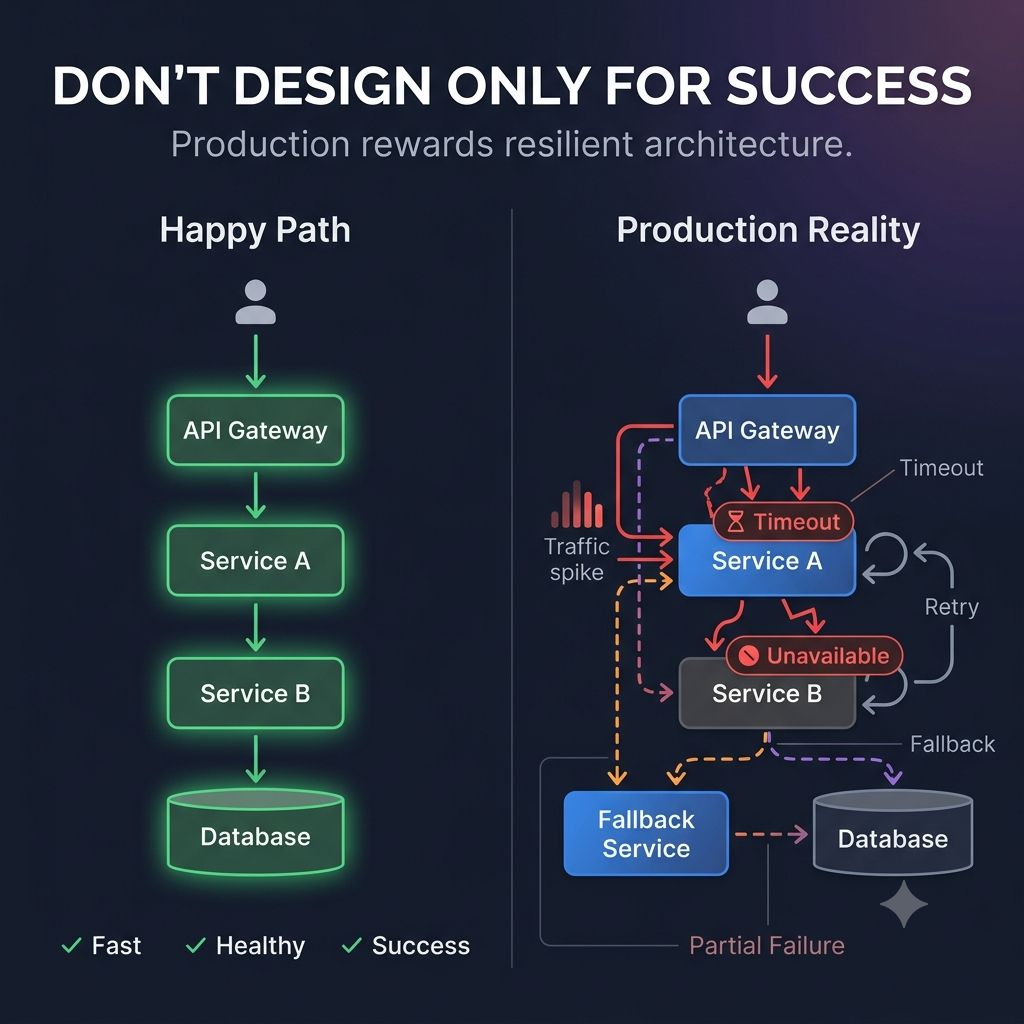
The difference between a demo and a production system isn't functionality. It's how the system behaves when something goes wrong.
One lesson that's changed how I evaluate architecture is this: Don't only review the happy path.
Ask uncomfortable questions instead.
- What happens if this API takes 10 seconds to respond?
- What happens if the payment provider is unavailable?
- What happens if one service starts returning errors?
- Can users still complete the most important tasks?
Great architecture isn't just about making success possible. It's about making failure predictable and manageable.
Because in production, failures aren't exceptions. They're part of normal operation.
The best design reviews I've been part of spent less time discussing how the system works... ...and more time discussing how it fails.
That shift in thinking changes the quality of every architectural decision that follows.
Keep reading
The Best Systems Aren't The Ones That Never Fail
Reliability is not the absence of failure, it is graceful behaviour during one. Designing systems that degrade instead of collapsing.
The Fastest Query Is the One You Never Execute
The dashboards looked healthy, yet users said the app felt slow. The culprit wasn't an expensive query — it was the same query running over and over again.
The Most Dangerous Assumption in Distributed Systems
"This request will only happen once" causes more production incidents than almost anything. Why state-changing actions should assume they may arrive twice.